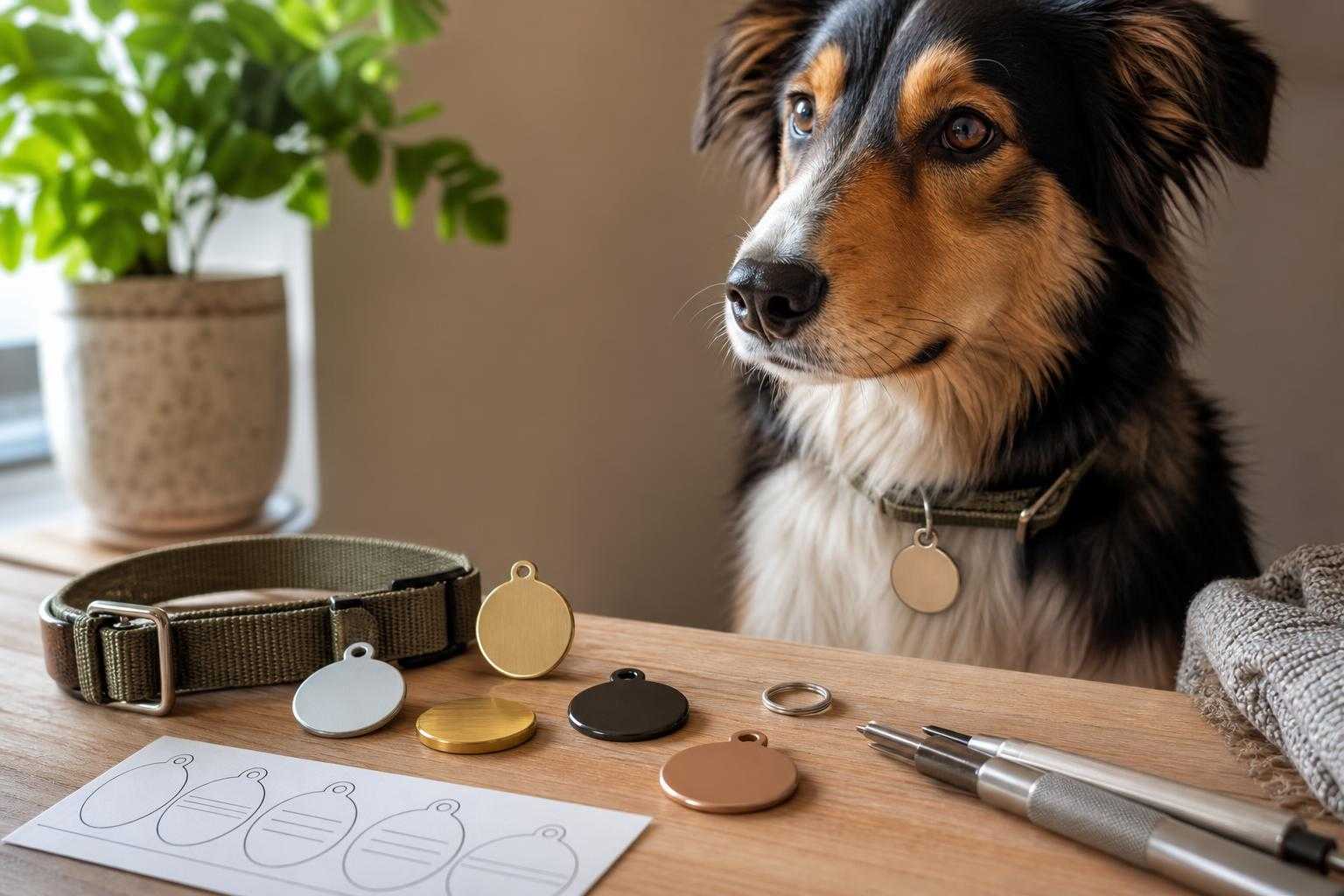
Engraving is the detail that turns a pretty tag into a useful everyday safety accessory. The right method should stay readable, suit the material and keep your dog or cat easy to identify if they ever wander off.
Why engraving quality matters
A pet ID tag is handled, rubbed against collars and exposed to rain, dust and daily movement. If the engraving fades too quickly, the tag loses its purpose. A good engraving should remain clear enough to read at a glance, even after months of use.
For most pets, the essentials are simple: a name, a phone number and sometimes a short note. The goal is not to fill every line, but to keep the most useful information legible.
Diamond engraving
Diamond engraving creates a fine, precise mark by cutting lightly into the surface. It is well suited to metal tags because the result is clean, discreet and durable. It is a strong choice when you want a classic finish without heavy visual contrast.
Its main advantage is balance: elegant enough for a refined tag, practical enough for daily identification.
Laser engraving
Laser engraving offers a very precise result and can create strong contrast on some materials. It is often used when the design requires a sharp, modern finish. Depending on the tag surface, the result can be more visible than a subtle mechanical engraving.
The key point is to adapt the engraving to the material. A method that looks excellent on stainless steel may not produce the same effect on enamel or brass.
What should you engrave?
A short, readable message is usually better than too much information. For a dog, a mobile phone number is often the priority. For a cat, especially one that goes outdoors, a clear phone number and a simple “call my owner” style message can help.
If the tag is small, avoid long addresses or decorative text. Readability matters more than filling every line.
You can compare formats and materials in our dog ID tags, cat ID tags and pet ID tag collections before choosing the tag that best fits your pet.